
Housing Application Forms
Complete the forms to apply for housing at Heartland.
Open Housing Application FormsComplete the forms to apply for housing at Heartland.
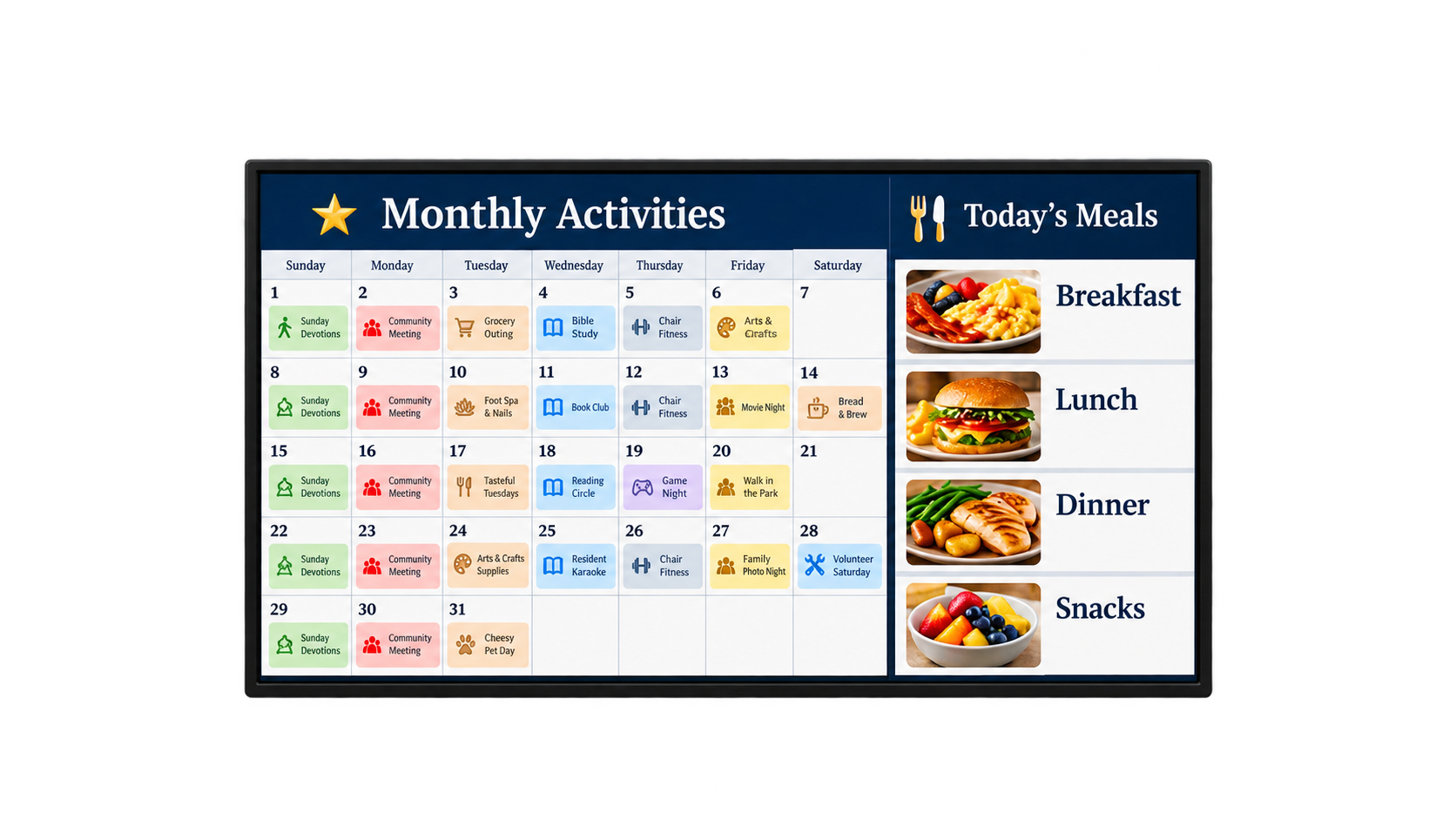
Open Housing Application FormsResidents use it for schedules and communication. Staff use it for schedules and facility management.
Open Heartland ConnectThe schedule provides dependable routines without assuming every veteran’s schedule is the same. Residents may have their own schedules, attend classes, or have changing shifts. Time-sensitive duties stay scheduled; other assigned responsibilities can be completed during the day as long as they are finished and verified.
The property already gives Heartland a main facility, director’s residence, barn, workshop, driveway, parking, and lagoon. Select each resource below to see its practical use, improvements, upkeep, and safety questions.
Barn care and horsemanship activities.
Kennel space is available for veterans who arrive with a dog. If a veteran is referred for an emotional support animal (ESA), Heartland can help connect them with a dog and appropriate training.
Hen care and egg production for Heartland.
Beekeeping and pollinator habitat for Heartland.
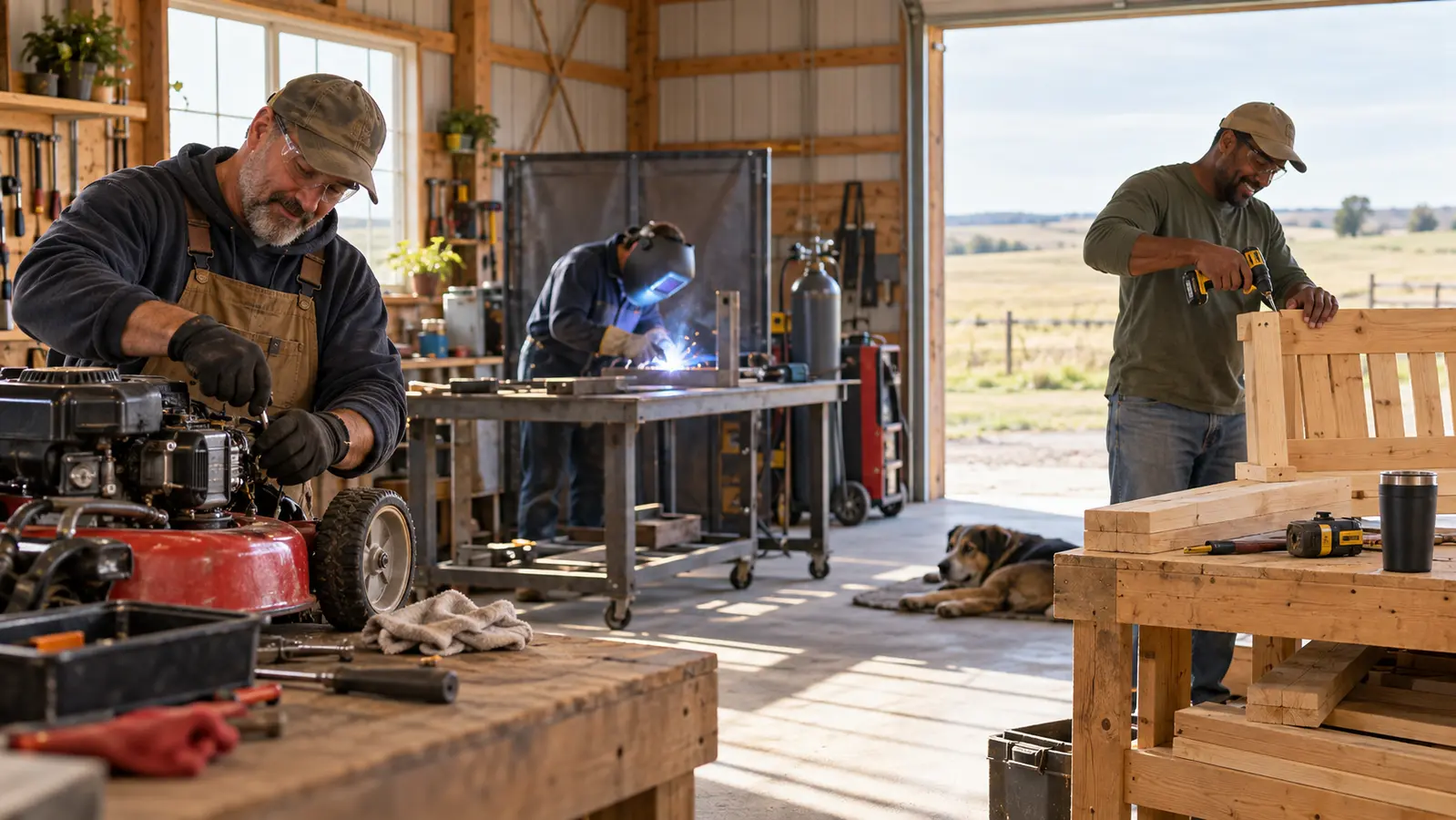
Use the workshop for supervised personal projects, welding and fabrication practice, small-engine or equipment repair, carpentry, tiny-home components, and community service.
Keep the residence a private home, not an extension of resident living space. Before occupancy, confirm the building, electrical, plumbing, heating, smoke and carbon-monoxide alarms, bedroom egress, locks, insurance, and emergency access are suitable.
First identify exactly what the lagoon serves, whether it is active, who owns it, its permitted capacity, and whether as-built plans, easements, inspection records, or operating instructions exist. Do not treat it as a pond, animal water source, recreation area, or stormwater basin.
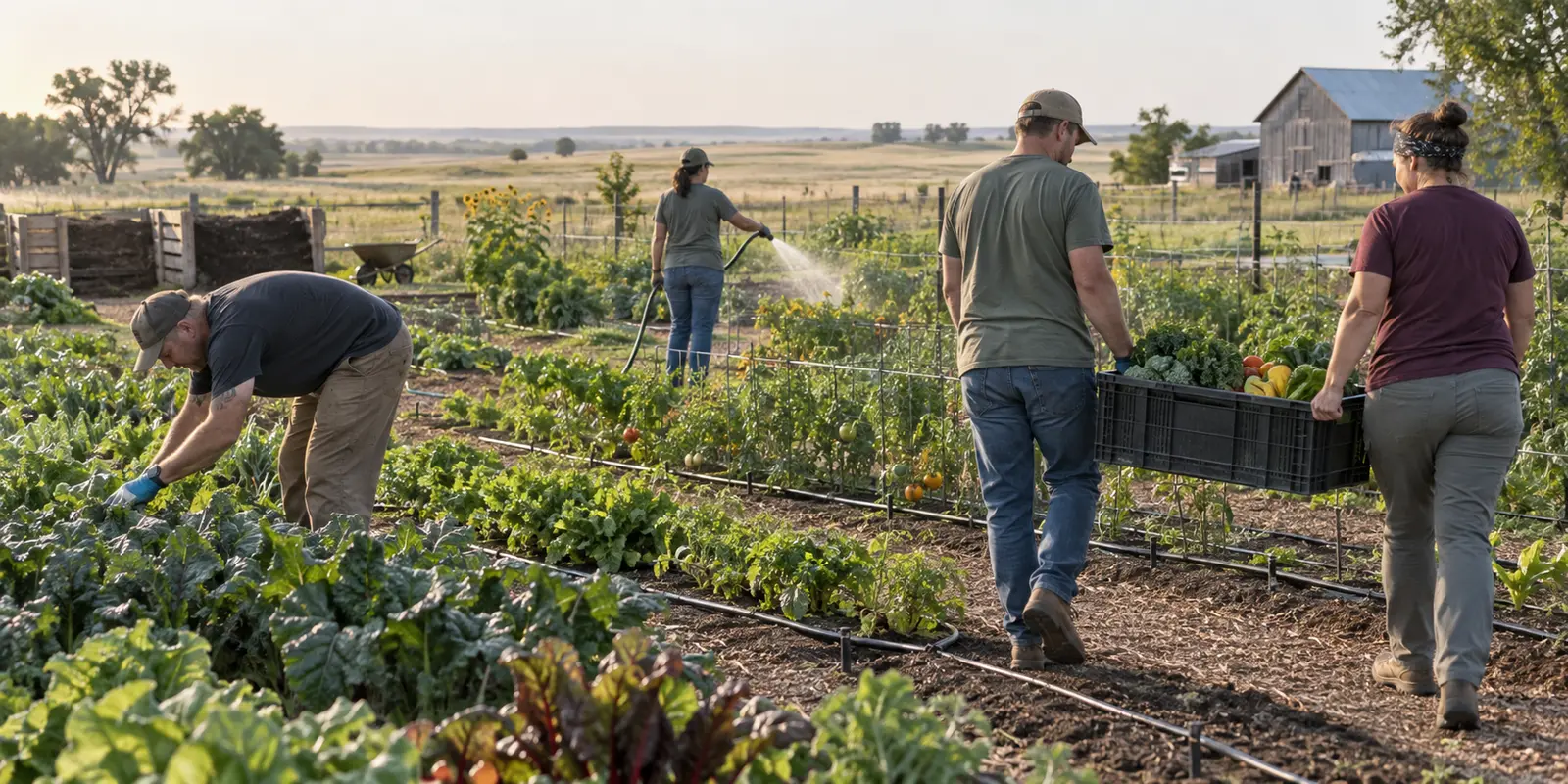
Reserve one-half to three-quarter acre for the entire garden system, not just planted rows. Begin with about 10,000 square feet under cultivation and leave room for compost, paths, irrigation, tool storage, washing, crop rotation, pollinator plants, and future beds.
Every resident has personal responsibilities and shares in caring for the home according to their abilities. Group activities are completely optional, giving veterans opportunities for connection, healing, and new experiences without taking away their freedom to choose.
Residents may choose horse observation, grooming, groundwork, riding instruction, and horsemanship as they build emotional regulation and safe handling skills through an individualized progression.
Residents can take part in growing outdoor crops and indoor herbs, planning for each season, harvesting, preserving food, and keeping yield records.
Residents may gain supervised experience with framing, electrical awareness, plumbing basics, finish work, tiny-home construction, and project teamwork.
Residents may pursue hands-on training with qualified instructors and partner programs. Training includes shop safety, skill documentation, certification guidance, and connections to apprenticeship or employment opportunities. Participation or course completion does not guarantee employment.
Residents can take part in animal care and the safe production of eggs, breads, jams, jellies, cow and goat cheeses, yogurt, soaps, and personal care products.
Residents can receive support with budgeting, transportation, appointments, benefits navigation, employment habits, conflict skills, and housing preparation.
Commercial driver training generally takes about six to nine weeks. Veterans who complete the course can be connected with employment opportunities through participating local trucking companies. Course completion creates opportunity but does not guarantee employment.
Residents may join morning reflection, weekly devotion, and prayer, seek one to one spiritual guidance, or connect with a local faith community.
The horse program is optional and individualized. It can offer calming routine, confidence, body awareness, trust, responsibility, riding skills, and advanced horsemanship without assuming every resident wants to ride.
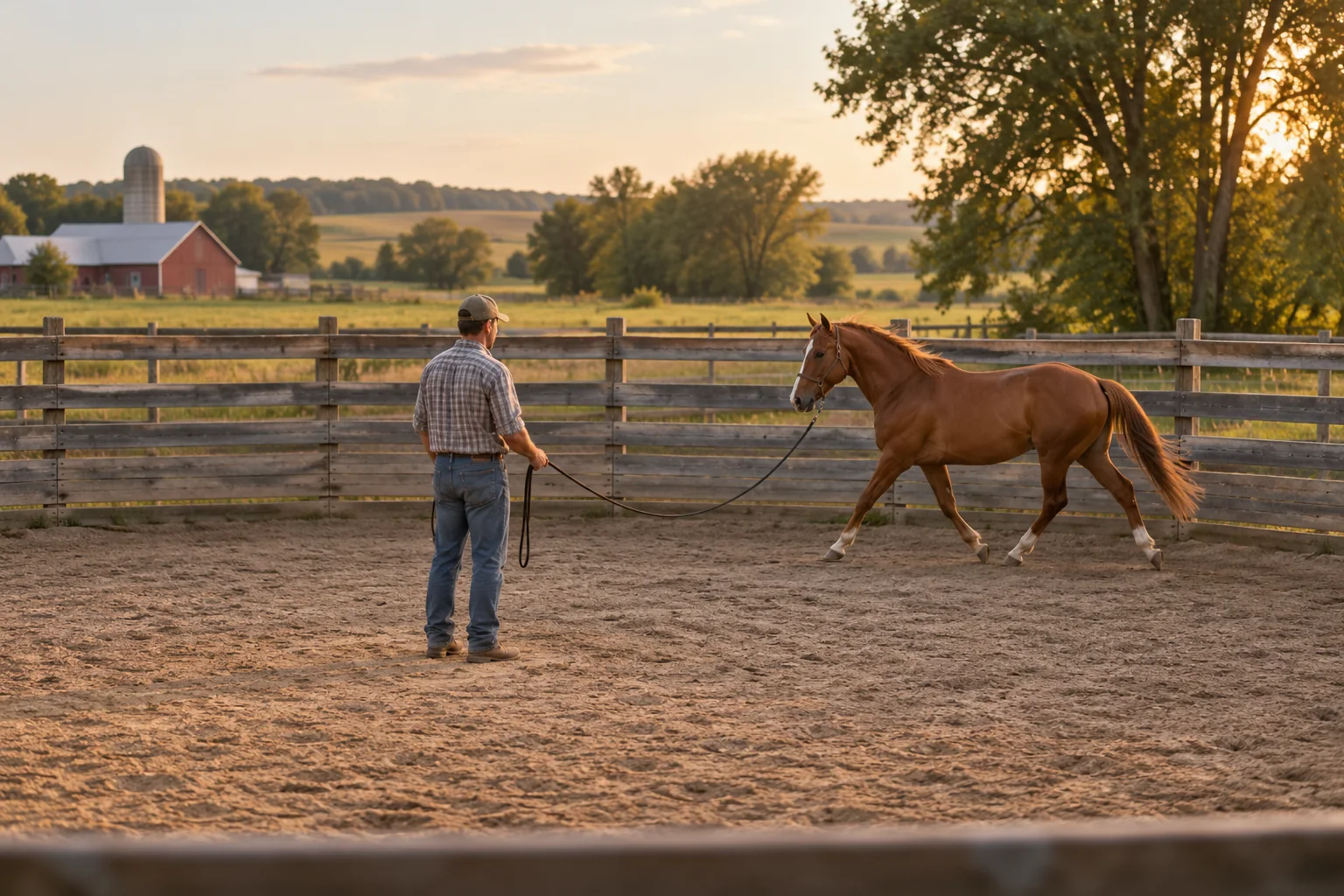
Review boundaries, emergency signals, clothing, helmets, gates, horse behavior, and each resident’s comfort, health, mobility, and experience. Begin by observing horses and learning how they communicate.
Offer grooming, leading, tying with safe-release methods, personal-space exercises, breathing, obstacle work, and simple barn routines. Ground sessions can stand alone as a complete program.
Use a calm, suitable horse in an enclosed area. Teach mounting, balance, steering, stopping, walking patterns, and dismounting. Add a horse leader or side walkers when needed and progress only when horse and rider are ready.
Residents who demonstrate consistency may learn more advanced groundwork, riding patterns, tack care, pasture handling, health observations, feeding records, and assistance with lessons.
A young horse may be brought in only with a qualified trainer, suitable facilities, a written training plan, and a separate risk review. Veterans may observe or assist according to demonstrated skill. Green horses should not replace calm lesson horses or be used with beginners.
Heartland can provide horsemanship and equine-assisted learning through appropriately trained staff. If the service is described as psychotherapy, counseling, occupational therapy, physical therapy, or another clinical treatment, a properly licensed clinician and qualified equine professional must direct it.
Use written horse-selection and retirement criteria, veterinary and farrier schedules, daily welfare checks, rider limits appropriate to each horse, ASTM/SEI riding helmets, emergency-dismount and incident procedures, instructor training, volunteer orientation, tack inspections, weather limits, and a rule that either the participant or horse may end a session at any time. PATH International provides recognized standards and credentials for therapeutic horsemanship and equine-assisted services.
| Team | Residents | This week |
|---|---|---|
| Liberty | 6 | Kitchen and dining |
| Valor | 6 | House and laundry |
| Honor | 5 | Animals and barn |
| Resolve | 5 | Grounds and gardens |
Assignments rotate each Monday and apply Monday through Friday. Every task has a written checklist, a completion deadline, a lead resident, and staff verification. Work shifts, disability, health, and appointments are considered when assignments are made. On weekends, residents are free except for the scheduled cooking team.
Every veteran arrives with different needs, strengths, support systems, and goals. Some may be ready to move forward after about one month. Others may need close to a year. The anticipated average stay is six to nine months.
Establish safety, health care, documents, benefits, sleep, daily routines, transportation, and trust.
Build consistency in personal and household responsibilities while choosing the supports, skill opportunities, and community connections that fit the resident’s goals.
Strengthen employment or training, savings, relationships, leadership skills, and a realistic housing plan.
Move forward with income, housing readiness, aftercare connections, a personal transition plan, and continued belonging.
Residents do not graduate because a certain number of days has passed. Readiness is reviewed with each veteran using stability, fulfillment of personal responsibilities, work and life skills, support systems, income, housing, and the resident’s own goals. Choosing not to attend optional group activities does not count against a resident’s progress.
A brief weekly check in notices changes early. A fuller monthly review is completed with the resident, not merely about the resident. Scores guide support and do not punish honesty or a resident’s decision to decline optional group activities.
What went well? What felt harder? Do you feel safe? What support do you need this week? What is one next step you are willing to take?
Reliability, room and duty completion, work or training feedback, appointments, savings progress, conflict repair, coping skills, and the resident’s own assessment.
Use patterns across time, not one difficult day. Decide together whether the resident needs more support, is ready for greater responsibility, or should begin transition planning.
Safety threats, substance relapse, severe mental health changes, abuse, or medical concerns move outside the routine score and into the appropriate professional response plan.
Veterans help create secure next steps for veterans and their families.
Tiny homes are limited and are not automatically provided with admission or program completion. Applicants must be longer term Heartland residents and complete a separate screening and readiness process.
Heartland coordinates staff shifts, resident responsibilities, meals, and activities in two-week planning blocks. The President, Program Director, and Community Director can change the shared schedule. A CEO login linked to Community Director has the same editing access. Other approved management roles can view it. The President and CEO can request changes and review operational change history alongside both directors. Staffing positions are planning roles and do not indicate current hiring or filled positions.
Has facility management access, coordinates with the directors, and reviews shared requests and operational change history.
Reviews facility operations, requests changes from the directors, and views shared requests and operational change history.
Leads the facility, coordinates the program, and can view and edit the full two-week schedule.
Coordinates community life and daily operations, and can view and edit the full two-week schedule.
Supports administration, management coordination, and the directors. Views the full schedule without changing other people’s assignments.
Coordinates kitchen, meals, food planning, gardens, and growing systems. Views the full schedule without changing other people’s assignments.
Supports livestock care, animal records, and daily care routines.
Coordinates shared spaces, laundry, sanitation, and cleaning routines.
Coordinates activities and practical transportation needs.
Supports buildings, equipment, grounds, and essential coverage.
Coordinates approved horse activities and handling support.
Four therapist profiles support intake forms, assigned resident plans, and appointment openings in Heartland Connect. Residents request a time and the therapist confirms it. Messaging requires agreed connections with pause, block, and report controls. Private clinical records remain separate.
Additional approved staff profiles support assigned facility responsibilities.
Oversees governance, development, and organizational planning. Operational schedule viewing does not grant clinical access.
Sign in to the management app Shared management documents and uploads
Growth should happen in stages. Livestock production can increase before resident capacity, but every expansion must add dependable staff oversight, adequate land, processing and freezer capacity, fencing, water, shelter, manure management, and a written animal-care plan. Resident work teams make the program possible, but animals still require qualified care every day of the year.
Begin with the established homestead plan: 1–2 horses, 1 cow, 1 companion goat, about 30 laying hens, gardens, and indoor herbs. Use the lean staffing model while documenting feed costs, chore hours, harvests, egg production, food use, resident participation, and animal-care demands for a full year.
Keep resident capacity at 22 and add 2 feeder cattle per year, 4 feeder pigs, and 75–100 meat chickens raised in manageable seasonal batches. Add 1 full-time Agriculture and Food Production Coordinator plus part-time or seasonal help during planting, harvest, processing, and staff leave.
Add at least 2 Resident Support Specialists, a second case-management or employment-navigation position, more clinical hours, and dedicated food-service support. Recalculate transportation, kitchen capacity, bathrooms, bedrooms, fire safety, and the number of awake staff needed on each shift before accepting more residents.
Plan for a second complete support rotation so two trained staff can be present during higher-need periods, another case manager, full-time kitchen leadership, more clinical coverage, and separate program leads for agriculture and trades. Physical expansion and licensing review would come before enrollment.
The 14-acre campus already supports buildings, parking, the lagoon, horses, the resident cow and goat, gardens, and activity space. Beef animals should therefore use nearby rented pasture. A practical planning placeholder is 15–25 rented acres for 2–4 cattle, 25–50 acres for 4–6 cattle, and 50–80 acres for 8–10 cattle, with the final stocking rate determined by forage, rainfall, soil, water, rotation, and supplemental feed.
Finished weight and processing yield vary, but two cattle can reasonably supply several hundred pounds of packaged beef each. That can support regular facility meals without claiming complete self-sufficiency. Increase only after actual annual food records show how quickly beef is used and whether pasture, feed, labor, processing dates, and freezer space are sustainable.
Create two small rotating pens for a starting group of 4 feeder pigs, with secure fencing, covered shelter, shade, frost-free water, dry feed storage, loading access, a quarantine option, and a manure or compost plan. Place the pig area near the barn service route only after confirming drainage and required separation from the lagoon, wells, residences, gardens, and food-handling areas.
Keep the laying flock for eggs and add meat birds in two or three seasonal batches rather than managing a large flock at once. Use separate housing and equipment when possible, movable pasture pens where suitable, predator protection, brooder space, sanitation between groups, and processor dates reserved before chicks are ordered.
Expansion requires reliable freezers with temperature monitoring and backup power planning, approved processing arrangements, inventory rotation, separate clean storage, feed and bedding storage, washable equipment, safe canning procedures, and menus that use the whole animal rather than only preferred cuts.
Residents can rotate through feeding, watering, health observations, fencing, pasture moves, broiler care, egg collection, garden production, harvest, freezing, canning, meal preparation, recordkeeping, and product sales. Participation remains based on ability, safety, goals, and interest; staff inspect every essential task.
Add the Agriculture and Food Production Coordinator before meat animals arrive. Add resident-support positions before enrollment increases. Do not wait until existing employees are overloaded or rely on residents to cover a permanent vacancy, overnight shift, livestock emergency, or required professional role.
These are conservative concept ranges for budgeting and discussion. A local livestock professional, Nebraska Extension, veterinarian, insurer, fire officials, zoning authority, environmental regulators, and approved processor should review the final land, animal, manure, food-storage, and staffing plans before expansion.